
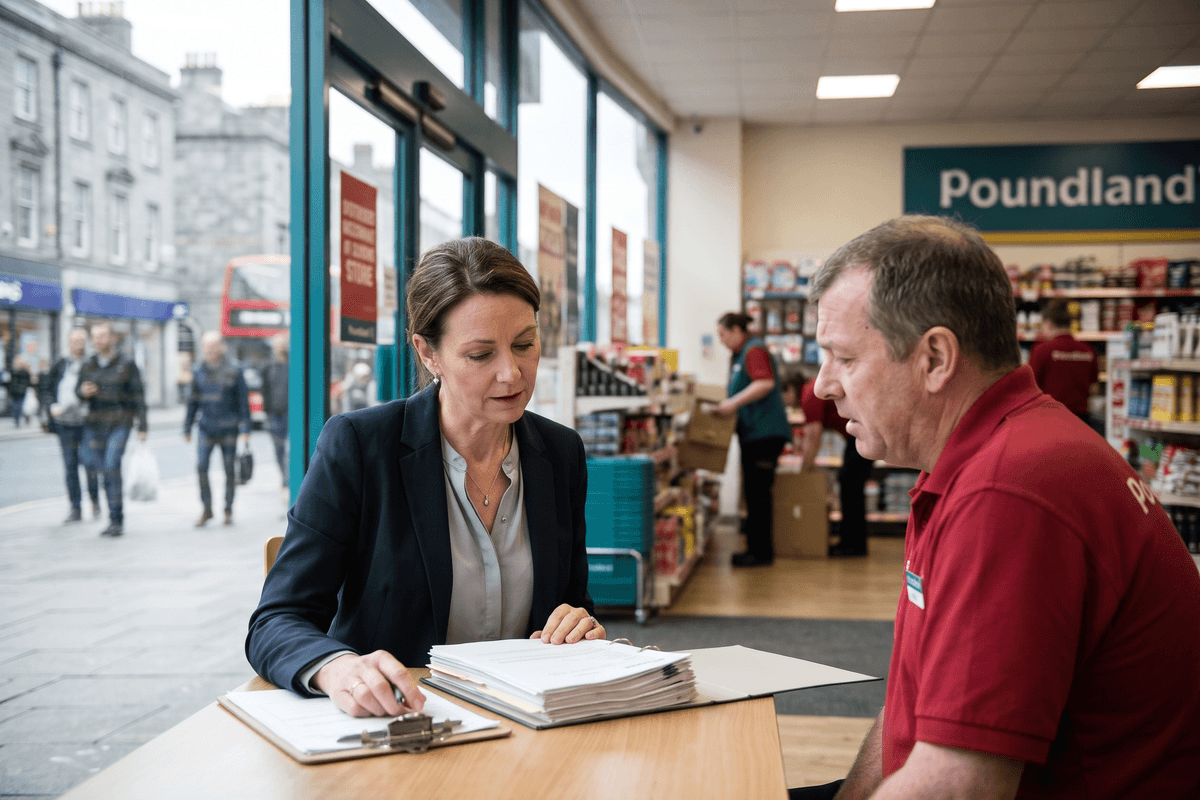

Administrators from AlixPartners have been appointed to the collapsed retailer Poundland, putting more than 10,000 jobs at risk, according to Accountancy Age. Clare Kennedy, Daniel Imison and Kevin Wall were appointed as joint administrators to Poundland Limited and Poundland Elgin Limited by the company's directors. For insolvency practitioners, the case is a large-scale reminder of how quickly a going concern can become a sale-and-break-up exercise, and of how much the process depends on buyers, unions and government engaging at the same time.
What happened
The shops and distribution centres will remain open and continue to trade during the administration, but the business is likely to be broken up. Poundland's US owners, Gordon Brothers, had held talks with bidders, but no agreement was struck. The administrators and AlixPartners will now assume responsibility for M&A activity and pursue all options, including sales of the business and its assets, in whole or in part.
The administrators have asked UK retail operators with open employment opportunities, as well as anyone interested in acquiring the business in part or as a whole, to make contact. Their spokesperson said:
“We appreciate this is a deeply concerning time for all involved – customers, suppliers and, in particular, Poundland colleagues.”
The spokesperson added that the priority is to work with all stakeholders, including representatives from government and Usdaw, to identify the best possible route forward.
Trading through Christmas, decisions in the New Year
Katie James, partner at law firm Howes Percival, expects the administrators to keep trading for now. As she put it:
“The administrators have said they will continue to trade, which is unsurprising given the Christmas period is usually the strongest for sales in the retail sector,”
She also said that it is unlikely any decisions on closures, redundancies or a sale will be made before Christmas. Her view is that the administrators will want to maximise the Christmas trading period, which requires staff and stock, and that she would expect an announcement early in the New Year.
James was also doubtful that a buyer for the whole business will emerge. She pointed to the attempts made so far and to Gordon Brothers' assessment that the business would realise more value if it were sold on a break-up basis.
The union and government response
Retail trade union Usdaw is seeking urgent talks with the administrators. National officer Bally Auluk said the union is “looking for an open dialogue about how we can save as many stores and jobs as possible”.
Usdaw's position is that the business still has options. Auluk said:
“We know that Poundland could have a future; the company has turned around its fortunes and there are a number of buyers who have shown interest, including a management team buyout.”
The union also said its members are grateful to government ministers and MPs who tried to engage with the owners, and that it has had useful meetings with them and with Poundland management. It is calling on the government to keep supporting its campaign to save jobs.
A wider cashflow squeeze for distressed clients
The Poundland case sits alongside another development this week. HMRC has raised its late payment interest rate from 7.75% to 8%, following the Bank of England's decision on 5 November to increase the base rate from 3.75% to 4%. HMRC's rate is now four percentage points above the base rate, up from the previous base rate plus 2.5%. The government's stated aim is to encourage prompt payment and reduce tax debt, which the article puts at over £43bn.
BDO's Ezra Dulberg pointed to the impact on businesses already under pressure:
“The increase in the rate of late payment interest will come as a nasty shock to those in arrears, many of whom may well already be struggling with cashflow problems.”
The same article notes that a Time to Pay arrangement is available, but interest continues to accrue until liabilities are cleared. For clients in financial difficulty, this means that a tax arrears position can grow even while a repayment plan is in place.
What this means for practice
Based on the sources and my own reading of them, these are the points I would take from the case:
- Check tax arrears early. Where a client has overdue HMRC liabilities, the cost of delay now runs at 8%, so the position should be quantified and a Time to Pay approach considered before it compounds.
- Map the disputed tax. BDO warned that high interest rates could add to the challenges for taxpayers in an HMRC enquiry. Payments on account can mitigate interest if tax becomes payable, but amounts repaid where no tax is due only earn HMRC's repayment rate of 3%.
- Plan for trading versus sale decisions. Administrations that keep trading over peak periods need clear valuation and stock assumptions, and advisers should be ready to explain how those assumptions support the eventual route, whether a whole-business sale, a partial sale or a break-up.
- Keep stakeholders engaged. Unions, government and management can all shape outcomes, as the Usdaw and ministerial involvement here shows.
What to watch for next
The key question is what the administrators announce in the New Year. Based on the comments from Howes Percival, the likely sequence is a trading period through Christmas, followed by decisions on closures, redundancies and sales. Watch for whether a buyer emerges for all or part of the business, including the management buyout that Usdaw has referred to, or whether a break-up becomes the main route. The outcome will also indicate how much weight the market places on the trading recovery Usdaw describes, and it will feed into how practitioners assess similar cases.